



Anyone who’s worked a busy service knows the phone always seems to ring at the worst possible moment. You’re seating guests, running food or keeping up with the next table, and suddenly there’s another call to answer.
But a missed call isn’t just a missed reservation. Guests might see it as a sign that the restaurant is too busy or doesn’t value their business, which can hurt your reputation too.
That’s where AI for restaurant reservations can make a real difference. It can handle routine booking calls and questions, giving your team one less thing to juggle when service gets hectic.
So, what can AI actually handle, and is it worth bringing into your restaurant? Let’s take a look.
What AI for restaurant reservations actually means in 2026
Strip away the marketing language, and AI in reservations does three practical things:
- Answers calls and takes bookings when your team is busy, chatting with guests naturally instead of making them work their way through a confusing phone menu.
- Analyses booking data to identify patterns — peak times, no-show risk, average spend by group size — that would take a person hours to work out manually.
- Predicts demand by looking at past bookings, busy seasons and local events, helping you plan your staffing and stock with more confidence.
None of this replaces your front-of-house team or the hospitality they bring. It simply takes care of the repetitive tasks that can pull them away from guests — answering missed calls, updating spreadsheets or trying to predict how busy Saturday will be.
The missed call problem, in numbers
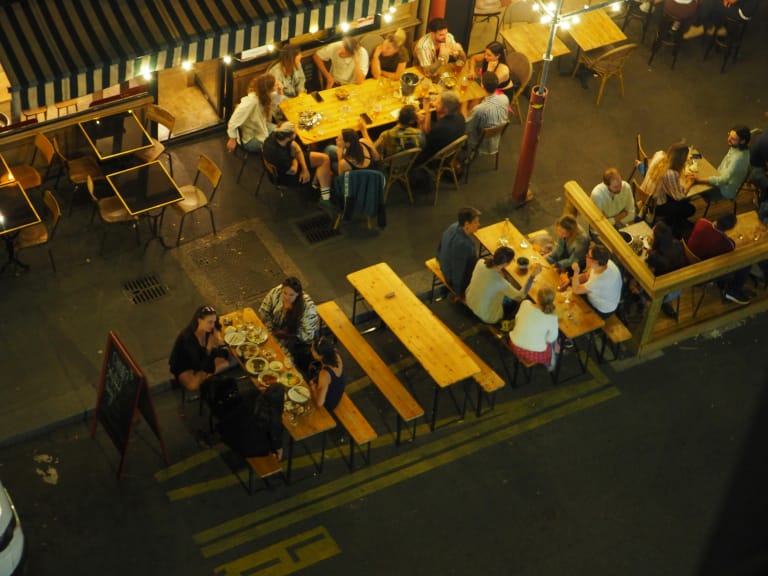
Missed calls are one of the easiest ways for restaurants to lose revenue without realising it. A call that goes unanswered doesn’t show up as a cancelled booking, it simply never becomes a booking.
And the numbers are hard to ignore. With 40% of restaurant calls going unanswered, the industry is estimated to lose $20 billion in revenue each year. That’s a lot of money slipping away simply because a guest couldn’t get through.
That’s where an AI receptionist can make a real difference. Now Book It work with Sadie, voice AI, which answers calls when your team can’t, handles common questions about opening hours, availability and dietary needs, and books tables straight into your diary.
For busy venues, that can mean hundreds more calls answered and hours of admin saved each month, especially during those peak periods (think Valentine’s Day, Mothers Day, Christmas Eve etc.) when your team is already focused on the guests in front of them.
For a real-world example, see how London Tavern Hotel handles 450 calls a month, giving the team more time to focus on guests during busy service.
How AI-driven tools help increase average spend per guest
AI reservation data can do more than just fill tables. It can also help you understand your guests better and increase how much each booking is worth.
Smarter table allocation
Booking data that tracks which table sizes and combinations generate the highest per-table revenue lets venues make deliberate seating decisions.
For example, AI can show you when splitting a larger table into two smaller ones could help you fit in more guests and increase spend, instead of leaving your team to figure it out on an already busy night.
Personalisation at scale
AI-assisted guest data can flag returning guests, previous orders, and special occasions automatically, giving front-of-house teams the context to upsell naturally (a bottle of wine for an anniversary, a dessert for a birthday) without relying on staff memory alone.

Demand-based staffing and stock decisions
Predictive booking data helps venues roster appropriately for a quiet Tuesday v.s a fully booked long weekend, reducing both understaffing (which costs service quality and spend) and overstaffing (which costs wages for no return).
Predicting demand before it hits the floor
Looking at past bookings, busy periods and local events can give restaurants a much better idea of what’s coming. If bookings start picking up for a weekend two weeks away, for example, you’ve got time to adjust the roster, order enough stock and get the team ready.
That’s where AI can be genuinely helpful. It’s about giving you useful information early, so you can make better decisions instead of scrambling at the last minute. Precisely what our advanced Insights reporting tool is built to do, with a natural language AI assistant that pulls from your real booking data and end of day reporting that gives your post-service briefing a for its money.
What AI in reservations does not do
It’s important to be realistic about what AI can and can’t do. From our experience working with restaurant teams, the best results come when AI supports the people on the floor rather than trying to replace them. You can see more on how AI and restaurant management software can work together.
AI can handle the repetitive parts of the job, like answering routine booking questions, taking reservations and sending confirmations. But it can’t replace an experienced team member who knows when a table needs a little more attention, when a guest has had a frustrating experience, or when it’s better to simply leave someone alone.
That human judgement is still a huge part of hospitality. The value of AI is giving your team more time and headspace for it by taking some of the admin and repetitive work off their plate.
A good option for venues sceptical about AI
Being sceptical about AI in hospitality is fair. There’s plenty of hype around it, and not every tool will deliver what it promises. At the same time, AI is clearly becoming more common across the industry.
A survey of leaders from more than 13,000 hospitality venues found that 72% were likely to implement AI solutions within the next 12 months, while 58% believed AI would bring positive changes to the industry.
From our perspective and experience, the safest approach is still to start small and see what actually works for your venue.
Instead of trying to introduce AI across the whole business, focus on one clear problem and be sure to measure the results.
An excellent place to start is using AI to answer calls during busy service. Track things like:
- Calls answered: How many calls that would normally be missed are picked up?
- Bookings captured: How many of those calls turn into actual reservations?
- Staff time saved: How much time does your team get back from handling fewer routine calls?
- Guest experience: Are guests getting quicker answers without adding more pressure to your team?
If the numbers show a real improvement after a few months, you can look at where else AI might help. If it doesn’t, you’ve only tested one part of your operation rather than making a big change across the board.
Common mistakes venues make with AI adoption

Adopting AI everywhere at once. Rolling out AI-driven tools across booking, marketing, and guest communication simultaneously makes it hard to tell what’s actually working.
Expecting it to replace training, not supplement it. AI tools that surface guest data or booking patterns are only useful if staff are trained to act on the insight, not just receive it.
Ignoring the data behind the AI. AI can only work with the information you give it. If your booking data is incomplete, inconsistent or spread across different systems, the insights won’t help much. Keeping your reservation data clean and consistent gives AI a much better foundation to work from.
Choosing AI features without checking the fundamentals. An AI receptionist is only valuable if it’s connected to restaurant booking solutions like a booking diary and floor plan underneath it. The AI is the layer on top, the foundation still matters most.
What this means for your bottom line
At the end of the day, AI doesn’t need to completely change how you run your restaurant to be useful. If it helps you catch a few more bookings, saves your team some admin and gives you a clearer picture of what’s happening with your reservations, that’s already a win.
The goal is simple:
- Capture more bookings by picking up calls when your team is busy.
- Give your team some time back by handling routine questions and bookings.
- Get to know your guests better through the booking data you’re already collecting.
- Make smarter decisions about staffing, tables and busy periods without relying on guesswork.
That’s where we think AI really earns its keep. It’s not about replacing your team or throwing another complicated system into the mix. It’s about taking care of the little things that eat up time, so your team can focus on what they do best: looking after guests.
Frequently asked questions
What's the best way for restaurants to use AI in managing reservations?
Start with a single, high-volume, measurable task — most commonly, answering calls the team can’t get to during peak service — and expand into predictive staffing and guest personalisation once the initial results are clear.
Is there an AI reservation option for venues that are sceptical about AI?
Absolutely. If you’re unsure about AI, you don’t need to overhaul your whole restaurant. Start with one practical problem, like missed calls. An AI receptionist can answer calls when your team is busy, handle common questions and book tables for you. It’s a simple way to see if AI actually makes a difference before taking on anything more.
Can AI-driven reservation tools actually increase average spend per guest?
Indirectly, yes. AI-assisted booking data supports smarter table allocation, flags returning guests and occasions for natural upselling, and informs demand-based staffing, all of which contribute to spend per cover, even though the AI itself isn’t taking the order.